
Wade Hampton City Collections
Wade Hampton is a Census-designated place, not an incorporated city that issued its own directory. The usable Wade Hampton city directory material is therefore found in Greenville-area publications and in the Greenville County Library System South Carolina Room. Start by checking the catalog and the South Carolina Room for the exact year, because the verified holdings are not a promise of an uninterrupted run. Each publication may use a different area label or include nearby communities.
| Collection | Years | Where Held | Access |
|---|---|---|---|
| Greenville city directories | Directories from 1883; individual years need a catalog check | GCLS South Carolina Room | In-person archive and reference use |
| R. L. Polk Greenville directory | 1983, 1987, 1992-96, and cataloged 2023-25 volumes | Hughes Main, South Carolina Collection, and reference locations | Reference or archive use, depending on the copy |
| Hill's Greenville directory | Catalog sequence reported through 1973 | GCLS catalog and South Carolina Collection | Confirm the exact volume and geographic coverage first |
| Reverse and criss-cross route | Year depends on the directory or licensed database | South Carolina Room, Ancestry Library Edition, and HeritageQuest | Library-card or in-library conditions vary by database |
| Greenville City Block Book | 1923-24 | South Carolina Room microfiche | Covered City addresses only |
Directory coverage follows the publisher, not the modern CDP boundary. A missing year or an address outside a volume's stated area is a reason to try the next volume, map, newspaper, or deed source, not a reason to fill in a household from a similar name.
Wade Hampton Directory Labels
The older Polk title is Greenville, South Carolina city directory: including City View and Taylors. That wording is a useful local warning: an address now associated with Wade Hampton may appear under Greenville, City View, Taylors, or another publisher-defined service area. Keep the locality printed in the volume when making a research note. It records how the publisher organized the area at that time and should not be silently changed to a modern label.
This is also why a page number, street spelling, and volume title matter. The South Carolina Room, County Real Property Search, and the Greenville County Register of Deeds each answer different questions. Historical listings help place a household in a dated publication; the parcel and recorded-document trail can test whether the address refers to the same property.
Note: Two nearby Wade Hampton Boulevard parcels were annexed by the City of Greenville in 2025, so a current street name alone does not settle an older source's jurisdiction or label.
Wade Hampton Directory Room
Hughes Main Library's South Carolina Room is the practical historical desk for a Wade Hampton city directory search. The Room is at 25 Heritage Green Place in Greenville, recommends appointments, and lists 864-527-9212 for contact. Its repository listing gives Monday through Thursday hours of 10 a.m. to 8 p.m. and Friday and Saturday hours of 10 a.m. to 5 p.m.; check the library before a visit because service hours can change. Staffed research computers, microfilm equipment, maps, newspapers, photographs, manuscripts, and local-history material make it possible to compare several years rather than relying on a single hit.
The South Carolina Room's collection page shows the local-history setting used for Wade Hampton city directory work.
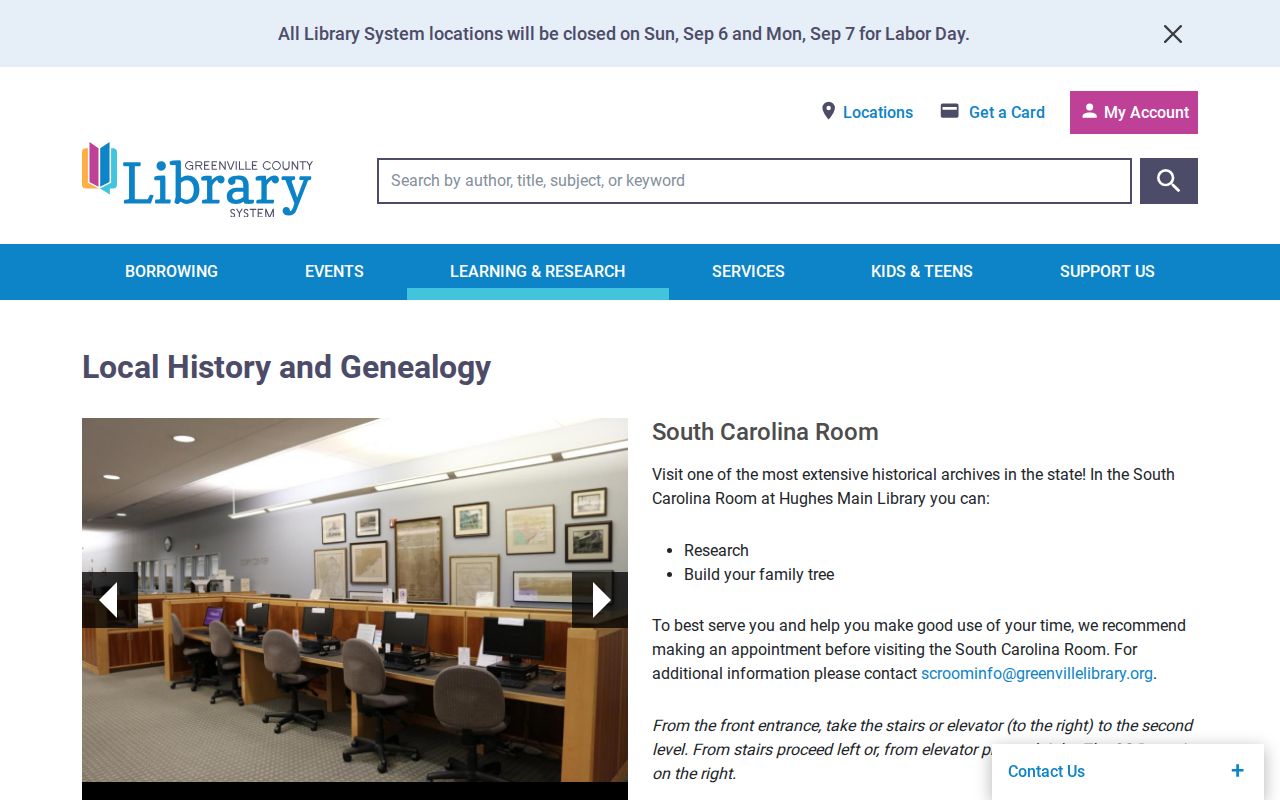
The research computers and microfilm services shown there are especially useful when an older directory, map, or newspaper is not available as an unrestricted web image.
Wade Hampton Polk and Hill
The GCLS catalog record for Polk's Greenville directory confirms reference or archive copies for 1983, 1987, and 1992 through 1996, while the catalog also identifies current 2023 through 2025 Polk volumes. A separate catalog result identifies Hill's Greenville city directory and reports a sequence ending in 1973. Those are catalog facts, not evidence that every intervening year or every Wade Hampton address is present. Request the volume by its publisher, title, and year, then inspect its geographic statement and street listing.
The Polk catalog listing is the source for this documented run and library-use status.
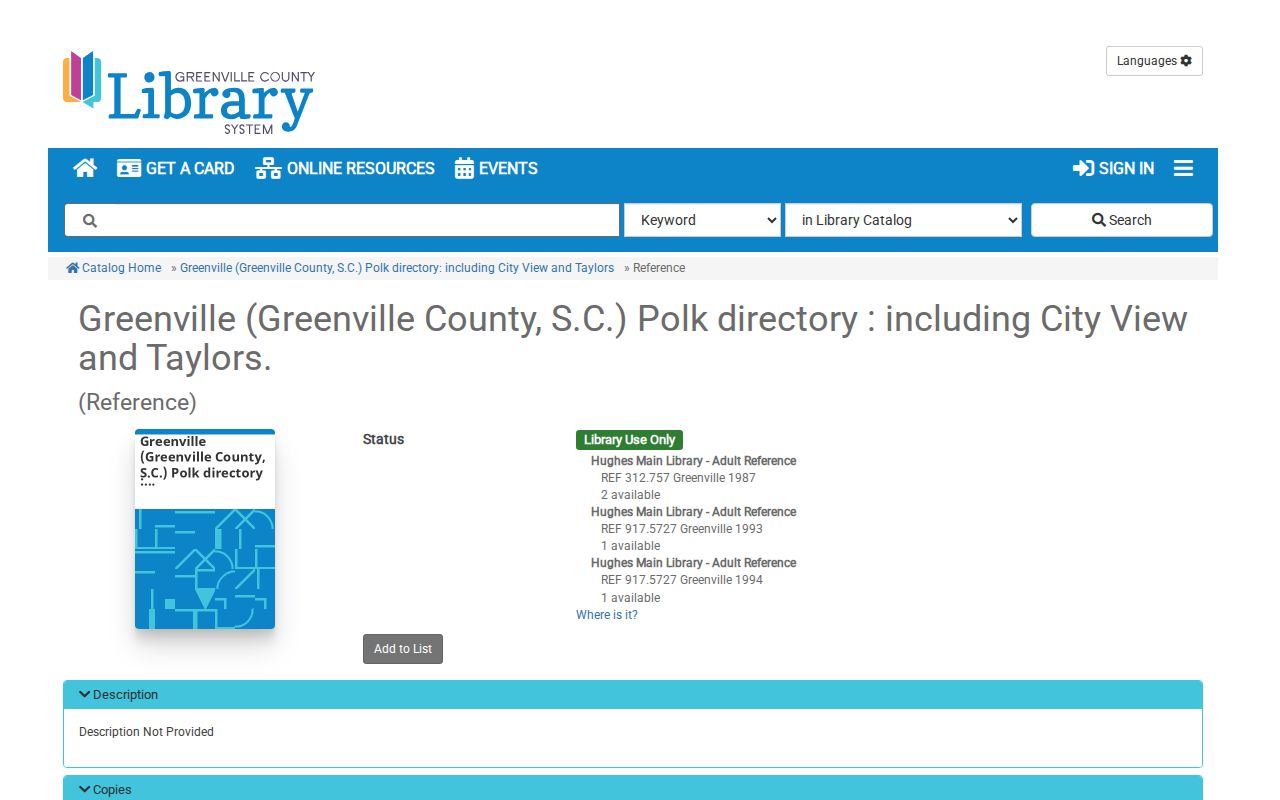
The catalog gives a reproducible starting point, but the physical or licensed copy remains the place to verify spelling, abbreviations, address coverage, and the actual directory line.
Read Wade Hampton Directories
A local directory entry should be transcribed, not translated from memory. No unrestricted official page image was found that supports quoting a specific Wade Hampton household line, so the safest practice is to record only what the inspected volume actually prints. Look for the name as printed, the street address, occupation or employer, spouse notation, and any household-status mark. A directory often identifies an adult or householder and does not prove every person living at that address.
| Name | Record surname, given name or initials, and any spelling variation exactly as the volume prints them. |
|---|---|
| Address | Copy the house number and street, plus the volume year and page, before comparing it to a modern address. |
| Occupation or employer | Use it as a dated distinguishing detail, not proof of an unbroken personal history. |
| Spouse or household notation | Retain the exact parenthetical or other notation instead of expanding it without that volume's key. |
| Status mark | Check the publisher's own abbreviation page before treating a mark as an owner, renter, widow, roomer, or other status. |
- Criss-cross directory
- The street-order portion of a directory that can begin with an address and lead to the listed person or household for that edition.
- Householder index
- A name arrangement centered on householders when a particular directory supplies one; it is not the same as a full household census.
- Abbreviation key
- The publisher's explanation of its own shortened labels, usually found in the volume and worth copying with the entry.
Reverse Wade Hampton Directories
For an address-first question, ask for the criss-cross or reverse section rather than starting in the alphabetical list. The library's home-history materials point researchers to the directory shelf at SC 917.5727 and to Ancestry Library Edition and HeritageQuest for this kind of address-to-listed-person work. Find the street and house number as the period printed them, note the name and page, then verify the address against a directory one year earlier or later. Do not assume the listing establishes present occupancy or that the street numbering stayed unchanged.
Some database access is limited to library use or depends on a card. An appointment is better than a quick web search when the task needs several volume comparisons, a map legend, or microfilm review. The GCLS County and State Records guide links this shelf work to deeds, plats, maps, newspapers, and its local indexes.
Wade Hampton Directory Maps
The verified record trail has useful checkpoints but no claim of one complete online sequence. The South Carolina Room reports city directories from 1883. Hill's catalog sequence reaches 1973, and cataloged Polk copies include the specific runs noted above. The 1923-24 Greenville City Block Book and Greenville Sanborn material can add street or building context, but their City coverage does not automatically extend to every Wade Hampton address. Label the map year and coverage before using it to interpret an entry.
- 1883: the South Carolina Room's repository listing begins its city-directory holdings from this year.
- 1923-24: the Greenville City Block Book offers a dated microfiche reference for covered City blocks.
- 1973: the Hill directory catalog sequence is reported to end.
- 1983, 1987, 1992-96: those Polk copies are specifically cataloged at GCLS.
- 2023-25: current Polk volumes are identified in the catalog.
The County and State Records guide documents the library route to historical maps and local record collections.
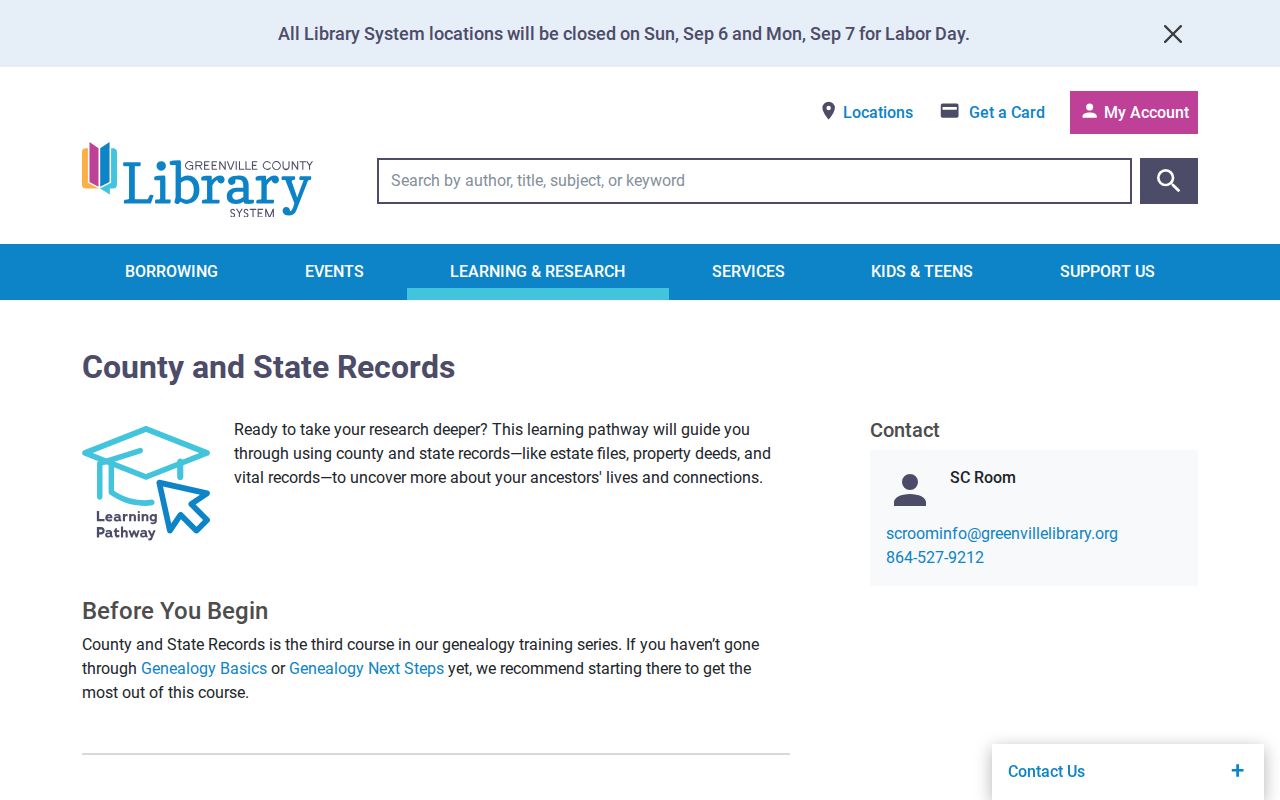
Using the guide with a known directory year helps separate an address clue from the map, deed, and newspaper sources that may confirm its setting.
Trace Wade Hampton Directories
A household trail is strongest when every observation stays tied to its own date. Start with a known address or name, determine whether the volume covers that locality, and make a clean transcription. Pair directory intervals with the federal census after its 72-year public-release period: the census can supply a broader household view, while a directory may carry an adult's address and occupation between census years. The historical collections themselves remain the best source for the volume-level details.
- Locate the first confirmed name or address in a dated Greenville-area directory and record its title, publisher, year, and page.
- Check the prior and following volumes for the same person, spelling variant, street, occupation, or spouse notation.
- Use the reverse section, if the edition has one, to test the address against the street-order listing.
- Compare the period with a released federal census, keeping the directory's adult listing separate from the census household.
- Use a deed, property card, obituary index, or newspaper issue to investigate a move, death, estate, or address change.
A disappearance can mean a move, death, changed spelling, a different publisher's geography, or simple non-listing. Retain the uncertainty until another dated source closes the gap. When a historical result needs a present-day property context, use the Wade Hampton street records route rather than treating an old directory as a current roll.
Wade Hampton Directory Fallbacks
When the catalog alone is not enough, use the access path that matches the missing item. The South Carolina Room offers appointments, staff assistance, microform, maps, newspapers, and licensed genealogy databases. The Greenville County Historical Society holds maps, directories, photographs, papers, research files, newspapers, rare material, and more than 20 Greenville-area maps from the 1880s; some material requires an in-person visit. The South Carolina Department of Archives and History provides the state archival catalog and research route for related county and state series.
For a bounded remote question, the GCLS Record Request form accepts a name, dates, context, delivery choice, and contact details. It offers specified vital and newspaper searches for $5 and deeds or probate estate papers for $15, with up to five qualifying vital or newspaper requests each month free to eligible county cardholders and purchased-card non-residents. Fees are paid in advance and are nonrefundable when no record is found, so give staff the exact directory year, street, surname variant, or newspaper date already identified.
Note: A remote request works best for a narrow, cited target; comparing several directory years or map sheets is better handled with an appointment and a research log.